
An idea for FTFO.com
A series of live experiences
Plan a single-night pilot around the room, the program and the guest experience.
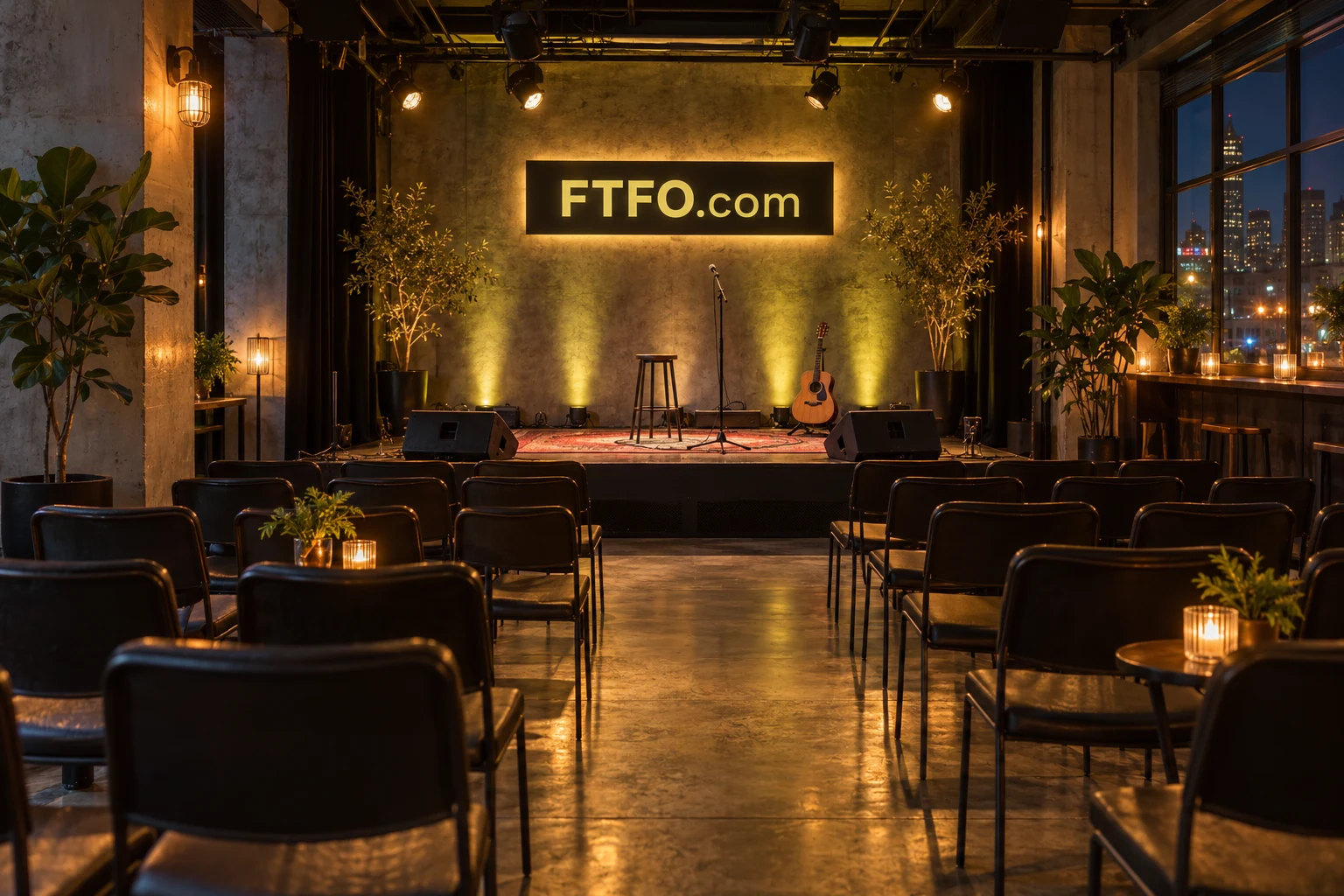
A recurring event identity is built one evening at a time. FTFO.com could serve as the home for a small series that brings independent makers, creative workers and interested neighbors into the same room. The first edition might combine a short conversation, a demonstration and time to meet. This is an illustrative concept. Start with a single night, a venue partner and a guest experience the organizer can describe clearly.
Give someone a reason to attend
Choose one audience and one reason for that audience to leave home. A session about how a local maker develops a product is more concrete than a general creative networking night. It suggests who should speak, what should be shown and what a guest might learn. The social portion can follow naturally once people have a shared subject to discuss.
Write the invitation before committing to a complex program. Include the subject, the intended guest, what will happen and how long the event lasts. Ask several people in the audience whether they understand the offer and what would make attendance difficult. Transport, timing, accessibility and the comfort of arriving alone can matter as much as the speaker. Use those responses to shape the pilot rather than adding more activities by default.
Plan with the room you actually have
Walk the venue with the person responsible for running it. Discuss the approved layout, permitted occupancy, access routes, toilets, power and load-in arrangements. Ask which responsibilities belong to the venue and which belong to the organizer, then put that agreement in writing. Confirm the venue's applicable requirements with its operator; a ticketing setting cannot determine a safe or lawful occupancy for the room.
Sketch the guest journey from the street to the seat and back out. Where does someone check in? Where can a late arrival wait? Can a wheelchair user follow the same route? Where will coats, equipment and empty packaging go? A small event can feel difficult if those details are left to the door team. Make the layout serve the program and leave practical space for the people delivering it.
Keep the first schedule readable
A pilot might use a short arrival period, one forty-minute conversation, a demonstration and an informal closing hour. Treat these timings as an example to test with the venue and participants. Add setup, sound check and clearing time to the operating schedule even if they do not appear on the public invitation. The end of the guest program is rarely the end of the organizer's work.
Assign a person to each transition. The host introduces the speaker, a technician cues the demonstration and the door lead knows when late arrivals can enter. Write down the contact for a problem with the room or a participant. Run through the schedule aloud before event day. If no one can explain how a transition happens, the schedule still contains an unanswered question.
Make ticket quantities match the plan
Start from the venue-approved guest arrangement and account for all categories of attendance. Staff, speakers and invited guests may affect the room's usable capacity, even when they do not buy a ticket. Keep the organizer's attendance plan separate from the public ticket inventory and reconcile them before opening sales. Do not increase availability merely because a ticket type appears sold out.
Eventbrite's capacity guidance distinguishes the quantity assigned to a ticket type from the total event capacity across ticket types. That distinction is useful when a pilot has general admission and complimentary tickets. Configure the total deliberately, then test a registration path and review the confirmation from the guest's perspective. Platform settings support the plan; they do not replace venue approval.
Build a budget that includes the quiet work
List the room cost, technical support, speaker arrangements, staffing, insurance requirements, signage and any refreshments. Confirm who pays each item and when payment is due. Include preparation and cleanup in the labor estimate. Make a conservative attendance scenario as well as the hoped-for one. If the pilot needs every ticket sold to cover committed costs, decide whether the scope can be reduced before obligations are made.
Choose a clear cancellation and change policy appropriate to the actual arrangement. Prepare the communication route for a venue change, participant cancellation or delay. Keep guest contact details available only to the people who need them. For photographs, decide how guests will be informed and how someone can raise a concern. These details belong in preparation because event day leaves little room for careful policy decisions.
Learn enough to plan a second edition
After the pilot, review attendance, arrival patterns, timing and the questions guests asked. Invite brief feedback about the program and the practical experience. Compare the budget with actual costs and pay attention to work that was invisible in the original estimate. A second edition should follow evidence that the format is useful and manageable, rather than an automatic commitment to a monthly calendar.
FTFO.com could hold the next date, the series description and a small archive of previous editions. Its compact identity can travel from an invitation to a venue sign while the program remains specific. For now, the next step is to draft the single-night plan with a venue partner. Agree the guest promise, room arrangement and division of responsibilities before announcing the first date.
Make it your own
A new chapter for FTFO.com.
Bring the project. Start the conversation.